AI Product Design
Talent Marketplace
Go-To-Market StrategyE
UX Strategy & Research
Cross-Functional Collaboration
Startup Product Development
CUSTOMER EXPERIENCE

Context & Overview
By 2019, Fannie Mae Connect had become a vital system supporting billions in daily transactions across the housing finance ecosystem. However, years of incremental growth had created a fragmented user experience — reports were siloed, navigation was inconsistent, and new users faced steep onboarding hurdles.
My team was tasked with redefining how thousands of users — from top mortgage lenders to internal operations staff — accessed, understood, and acted on Fannie Mae’s data.
My Role
Product Design Lead, Enterprise Experience
Team
2 Product Designers, 1 UX Researcher, 3 Engineers, 1 PM
Duration
8 months (Jan–Aug 2019)
Scale
50K+ enterprise users across 300+ financial institutions
Business Context
Strategic modernization of enterprise analytics to drive data-driven adoption and self-service efficiency

Challenge & Problem Statement
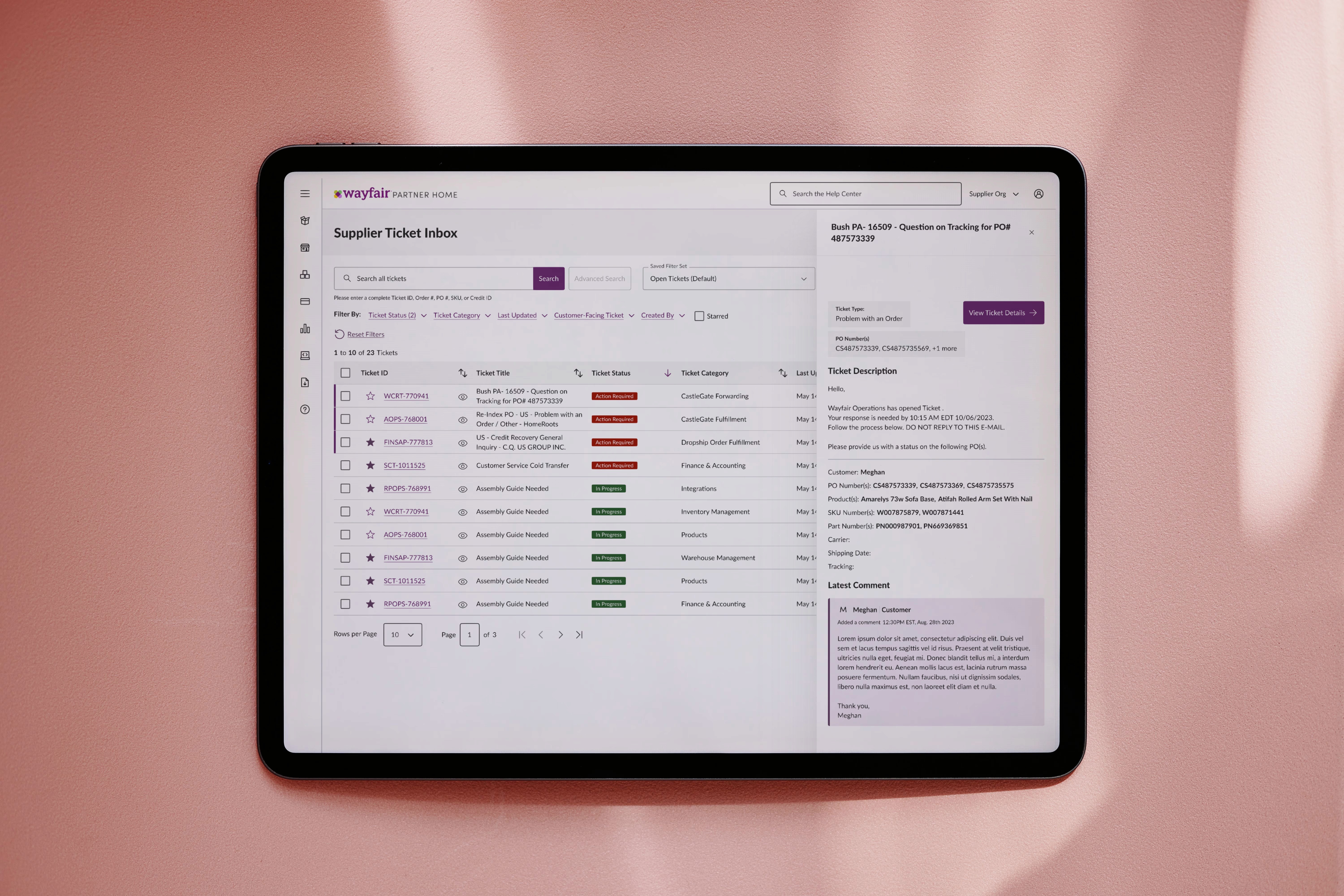
The problem wasn’t data availability — it was data accessibility. Users had to navigate multiple systems to find key operational or performance reports, often relying on support channels for simple tasks like permissions or report discovery.
This friction led to:
High volume of help desk tickets (~21,000 per month)
Underutilization of available insights
Inconsistent adoption rates across partner institutions
Project Goals
Reduce help desk inquiries by 25%
Improve time-to-insight for report retrieval and analysis
Increase customer satisfaction and platform adoption
Enhance the onboarding experience for new users

"
Our biggest opportunity wasn’t in adding new features — it was in removing friction. By simplifying access to insights, we empowered customers to spend less time searching for data and more time using it.
Discovery & Research
We began with a comprehensive discovery phase, combining qualitative and quantitative insights to understand how users navigated the ecosystem.
Methods Used
12 remote user interviews with lenders from Wells Fargo, Caliber, and Freedom Mortgage
Analytics audit of report engagement across 9 key product areas
Heuristic review of onboarding and access request flows
Key Findings
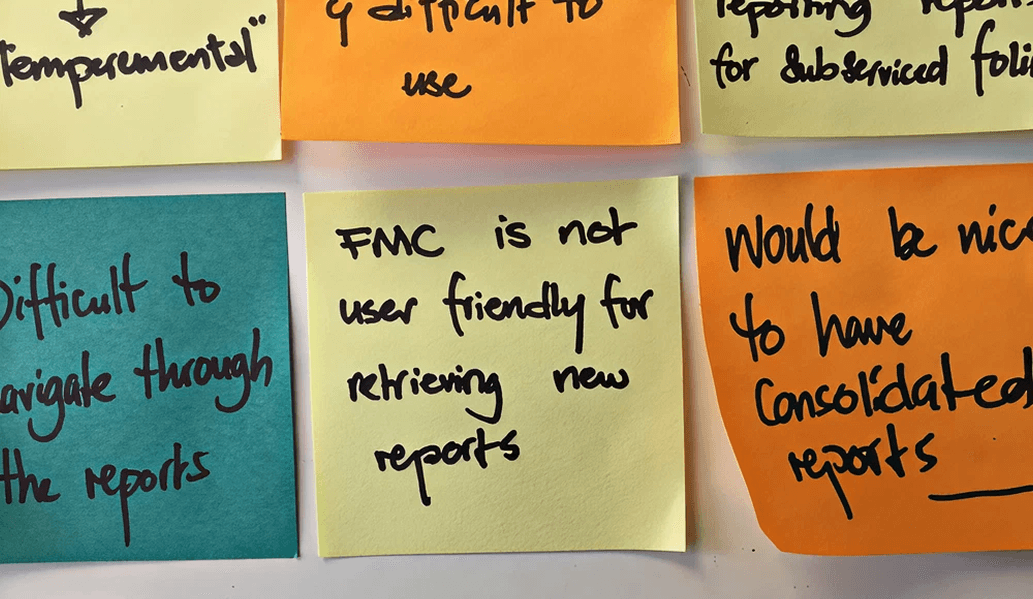
Users wanted a centralized, searchable homepage for all reports
Report access workflows were manual and slow, requiring email support
The help center lacked clear self-service options, leading to repeated inquiries
Users desired customized dashboards reflecting their specific business needs
These insights helped us shift from a “data delivery” model to a “data discovery” mindset — focusing on making insights more intuitive, actionable, and accessible.

"
What users needed wasn’t more data — it was clarity and control. Simplifying access became the most powerful form of innovation.
Design Strategy & Approach
The strategy revolved around simplification, personalization, and scalability.
Design Principles
One entry point for all analytics
Personalized navigation based on user role
Seamless self-service to reduce dependency on support
Consistent design language aligned with Fannie Mae’s enterprise design system
We reimagined the user flow from login to insight delivery
Introduced a dashboard-style homepage surfacing the most-used reports and actions
Designed an automated report access request system to replace email-based approvals
Revamped the help center into an interactive self-service hub
The new experience prioritized the 80% of tasks users performed daily while simplifying complex workflows for advanced users.


Execution & Collaboration
The redesign was executed through a joint product and design task force, aligning the Product Design, Engineering, and Capital Markets Business teams.
Key Leadership Contributions
Facilitated design sprints to align stakeholders on shared outcomes
Defined a scalable report taxonomy, reducing redundant content by 30%
Introduced a lightweight usability scoring framework to track improvement post-launch
Advocated for an API-first data access model to support future personalization
By embedding research and design reviews into the sprint cadence, we ensured a balance between user needs, business goals, and technical feasibility.

Outcome & Impact
The redesigned experience delivered measurable improvements across both user engagement and operational efficiency.
Platform Results
+165% increase in report engagement within the first 30 days post-launch.
40% faster task completion time for data retrieval and report downloads.
57% reduction in customer support tickets — from 21,362 to 9,017 per month.
$3.8M in annual cost savings through reduced ticket volume (based on $25.89 cost per case).
Customer Sentiment
Monthly customer satisfaction survey participation grew from 10 to 412 responses (+4,020%).
NPS scores improved from +12 to +46 within six months.
78% of respondents cited the new self-service tools as the “most valuable improvement.”
Organizational Impact
The success of the Connect redesign set a new internal benchmark for enterprise tool design within Fannie Mae. Its scalable framework was later adopted across other internal platforms, influencing how Fannie Mae delivers analytics and customer-facing digital products organization-wide.